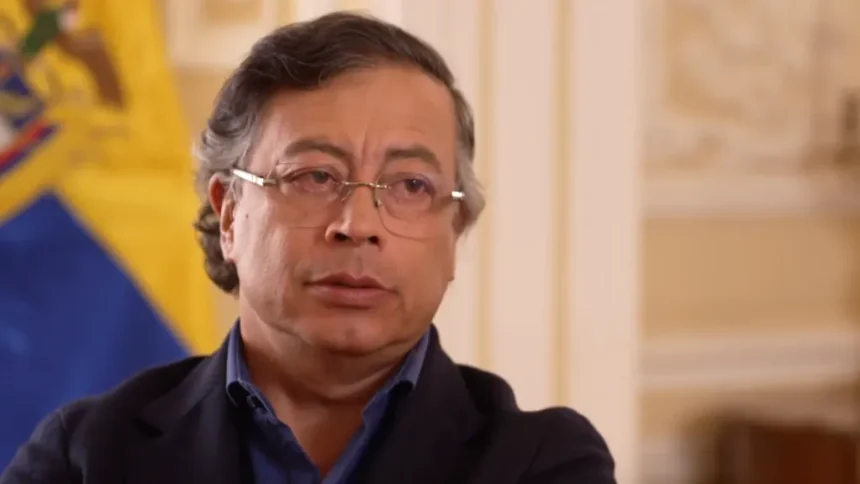
Colombian President Gustavo Petro has told the BBC that he believes there is now a “real threat” of US military action against Colombia.
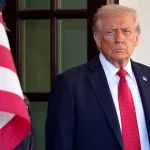
Petro said the United States is increasingly treating other countries as part of a US “empire.” His comments come after US President Donald Trump threatened Colombia with military action, warning that the US risks shifting from “dominating the world” to becoming “isolated from the world.”
Petro also accused US Immigration and Customs Enforcement (ICE) agents of behaving like “Nazi brigades.” The Trump administration has dramatically expanded ICE operations, saying it is cracking down on crime and undocumented immigration.
The BBC has contacted the White House for comment.
After US strikes in Venezuela and the capture of Venezuelan leader Nicolás Maduro, Trump said that a military operation targeting Colombia “sounds good.”
Trump has also repeatedly told Petro to “watch his ass,” remarks that the Colombian leader strongly condemned.
The two presidents spoke by phone on Wednesday evening. After the call, Trump said he would meet Petro at the White House in the “near future.” Writing on Truth Social later that night, Trump described the conversation as a “Great Honour.” A Colombian official said at the time that the call marked a 180-degree shift in rhetoric “from both sides.”
But by Thursday, Petro suggested relations had not meaningfully improved.
He told the BBC the call lasted just under an hour, “most of it occupied by me,” and focused on drug trafficking in Colombia, Colombia’s views on Venezuela, and “what is happening around Latin America regarding the United States.”
Petro sharply criticised recent US immigration enforcement, accusing ICE agents of operating like “Nazi brigades.”
Trump has frequently linked immigration to crime and drug trafficking in the US, using that argument to justify large-scale enforcement. He has also accused countries such as Colombia and Venezuela of failing to do enough to fight drug trafficking.
Since returning to the White House, Trump has deployed ICE agents to cities across the US. The agency enforces immigration laws, investigates undocumented immigration, and carries out deportations.
The administration says it deported 605,000 people between 20 January and 10 December 2025. It also claims that 1.9 million immigrants “voluntarily self-deported” after an aggressive public campaign encouraging people to leave on their own to avoid arrest or detention.
As of 30 November 2025, about 65,000 people were being held in ICE detention, according to data from Syracuse University’s Transactional Records Access Clearinghouse.
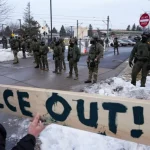
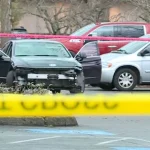
This week, a US immigration agent shot and killed a 37-year-old US citizen in Minneapolis, triggering overnight protests.
Federal officials said the woman, Renee Nicole Good, tried to run over immigration agents with her car. Minneapolis Mayor Jacob Frey, a Democrat, said the agent acted recklessly and demanded that federal agents leave the city.
Petro said ICE had “reached the point where it no longer only persecutes Latin Americans in the streets, which for us is an affront, but it also kills United States citizens.”
He warned that if this continued, the US would move “from dominating the world – an imperial dream – to being isolated from the world.”
“An empire was not built by being isolated from the world,” he said.
Petro argued that for decades the US has treated other governments, especially in Latin America, as part of an “empire,” regardless of international law.
The two leaders have long been political adversaries, often exchanging insults and tariff threats online.
After the US military action in Venezuela, Petro accused Washington of pursuing wars over “oil and coal.” He said that if the US had not withdrawn from the Paris climate agreement, “there would be no wars, there would be a much more democratic and peaceful relationship with the world — and South America.”
“The Venezuelan issue is about this,” he said.
Following Trump’s threats of military action against Colombia, protests were held across the country in the name of sovereignty and democracy.
Petro told the BBC that Trump’s remarks amounted to a “real threat,” pointing to Colombia’s historical loss of territory, including Panama in the 20th century. He said removing the threat depends on ongoing talks.
Asked how Colombia would defend itself if attacked by the US, Petro said he would “prefer it to be about dialogue,” adding that “work is being done” to pursue that path.
But he also warned: “Colombia’s history shows how it has responded to large armies.”
“It’s not about confronting a large army with weapons we don’t have. We don’t even have anti-aircraft defences,” he said. “Instead, we rely on the masses, our mountains, and our jungles, as we always have.”
Petro confirmed he had also spoken with Delcy Rodríguez, Venezuela’s acting president and former vice president and oil minister, and said he had invited her to Colombia.
He said Venezuela had long been subject to interference from foreign intelligence agencies. While such agencies operate in Colombia to combat drug trafficking, he said he opposed what he described as other “covert operations.”
Petro did not directly answer when asked whether he feared the CIA could carry out covert actions in Colombia similar to those in Venezuela, or whether informants might exist within his own government.
Maduro was captured by the US military’s Delta Force after a CIA source inside the Venezuelan government helped track his location.
Colombia is the world’s largest producer of cocaine and a central hub in the global drug trade. It also has major oil reserves and produces gold, silver, emeralds, platinum, and coal.
The US has said it will control sales of Venezuelan oil “indefinitely” as it prepares to ease restrictions on Venezuelan crude in global markets.
Speaking aboard Air Force One after the Venezuela operation, Trump called Petro a “sick man who likes making cocaine and selling it to the United States,” adding: “He’s not going to be doing it for very long.”
Petro denied the accusations, saying, “It has always been proven that I’m not involved in that.”
“For 20 years I have been fighting drug cartels, at the cost of my family having to go into exile,” he said.
A former guerrilla fighter, Petro has pursued a “total peace” strategy since taking office, focusing on dialogue with armed groups. Critics argue the policy has been too soft, as cocaine production has reached record levels.
Asked whether the strategy had failed and if he accepted responsibility, Petro said the growth of coca cultivation was slowing and described a two-track approach.
“One is talking about peace with groups that are bandits,” he said. “The other is launching a military offensive against those who don’t want peace.”
He said negotiations were ongoing in southern Colombia, where coca cultivation had fallen the most and homicide rates had dropped sharply. Cocaine is produced from coca leaves.
The policy of dialogue, Petro said, is meant to “de-escalate violence,” adding: “We’re not fools. We know who we’re negotiating with.”