Nick Reiner spent much of his life battling addiction — a deeply personal struggle he eventually shared publicly with the support of his father, Hollywood icon Rob Reiner.
On Monday, Nick was booked into the Los Angeles County jail on suspicion of murder, just hours after Rob Reiner and his wife, Michele Reiner, were found dead inside their Brentwood home.
For years, Nick cycled in and out of rehabilitation centers and experienced periods of homelessness as a teenager. His battle with addiction was long and difficult, but by 2015, he had gotten clean. That same year, he worked closely with his father on “Being Charlie,” a semi-autobiographical film centered on addiction and recovery.
Directed by Rob Reiner and co-written by Nick, the film tells the story of a successful actor with political ambitions and his son, who is addicted to drugs. Many elements of the story were drawn directly from Nick’s real-life relationship with his father — including a powerful line in which the father tells his son, “I’d rather you hate me and you be alive.”
In a 2016 interview with AOL, Nick said he “didn’t bond a lot” with his father while growing up.
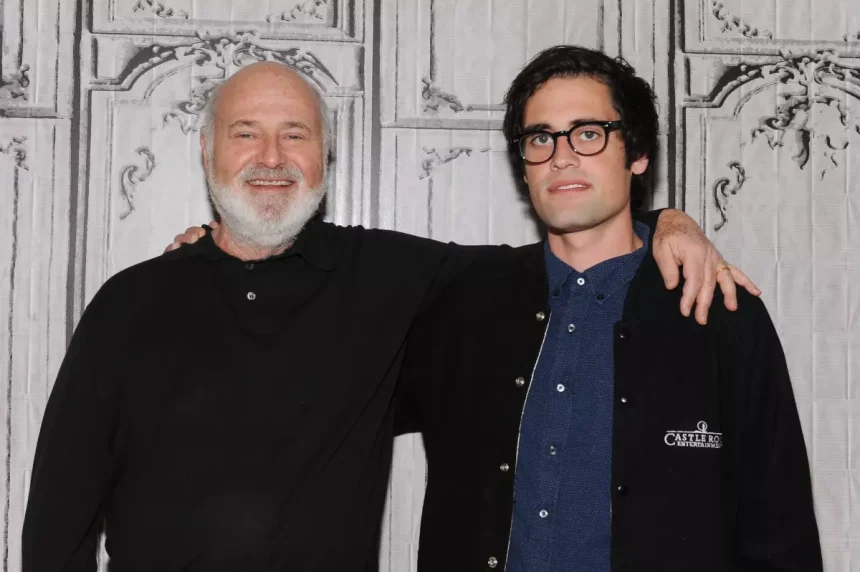
Nick appeared alongside his family at the Toronto International Film Festival in 2015 to promote *“Being Charlie.” During interviews, he explained that his decision to quit heroin came from a moment of blunt self-realization.
“I got sick of doing that,” he told The Times. “I come from a nice family. I’m not supposed to be out there on the streets and in homeless shelters doing all these … things.”
During that same interview, Rob Reiner expressed regret over relying too heavily on counselors instead of listening to his son.
“When Nick would tell us that it wasn’t working for him, we wouldn’t listen,” Rob said. “We were desperate, and because the people had diplomas on their wall, we listened to them when we should have been listening to our son.”
Michele Reiner echoed that sentiment.
“We were so influenced by these people,” she said. “They would tell us he’s a liar, that he was trying to manipulate us. And we believed them.”
Nick spoke openly about the many rehab centers and programs he tried — often without success. In a 2016 interview with People magazine, he said he ended up living on the streets after refusing to attend the rehab programs his parents recommended.
“If I wanted to do it my way and not go to the programs they were suggesting, then I had to be homeless,” he said.
He acknowledged that life on the streets nearly cost him his life.
“It’s all luck,” Nick said. “You roll the dice and you hope you make it.”
At the time “Being Charlie” premiered, The Times reported that Rob and Michele Reiner, at their lowest moments, feared their son’s story might end tragically.
Rob later said making the film resurfaced painful memories.
“It was very, very hard going through it the first time, with these painful and difficult highs and lows,” he said. “And then making the movie dredged it all up again.”
Still, he described the filmmaking process as therapeutic, saying it helped the family work through past trauma and grow closer.
Police have released few details about the killings of Rob and Michele Reiner.
Family friends told The Times that Rob and Nick argued Saturday evening at a party held at Conan O’Brien’s home. Several people reportedly noticed Nick acting strangely during the gathering.
The couple was found dead Sunday afternoon at their home in the 200 block of Chadbourne Avenue in Brentwood. Law enforcement later secured the area with crime-scene tape as the investigation continued.
Rob Reiner first rose to fame as Michael “Meathead” Stivic on the sitcom “All in the Family,” which aired from 1971 to 1979. He later became one of Hollywood’s most successful directors, with films including “When Harry Met Sally…,” “The Princess Bride,” and “This Is Spinal Tap.” His work took a more dramatic turn with “Stand by Me” in 1986.
One family friend said they were devastated by the deaths.
“They did everything for Nick — every treatment program, therapy sessions — and put aside their lives to save Nick repeatedly,” the friend said. “I have never known a family so dedicated to a child. To have it end this way is awful.”
In past interviews, Nick credited his parents for helping him achieve sobriety, while also expressing a desire to build his own life.
When NPR asked whether he and his father would work together again after “Being Charlie,” Nick said he needed independence.
“For now, it’s best for me to be sort of independent,” he said. “But that’s not to say I didn’t have an amazing experience.”
Rob Reiner agreed, praising his son’s talent.
“He was the heart and soul of the film,” Rob said. “Any chance I’d get to work with him, I would. But I understand him wanting to forge his own way. He’s brilliant and talented, and he’s going to figure out his path.”