
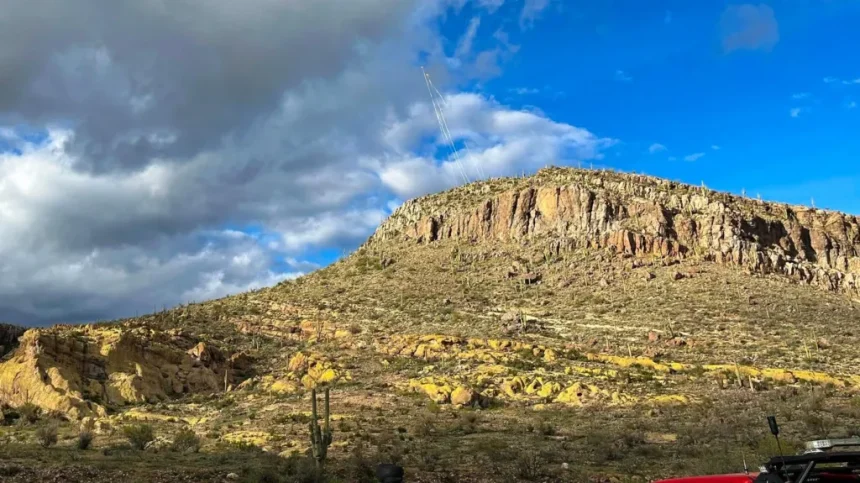
A helicopter crash in a remote Arizona canyon may have been caused by a slackline strung across the landscape, killing all four people on board, authorities said.
The incident occurred near Telegraph Canyon, east of Phoenix. According to the Pinal County Sheriff’s Office, a witness reported seeing the helicopter strike a portion of a slackline—used for an extreme sport similar to tightrope walking—before plunging to the bottom of the canyon.
Officials said the slackline was more than one kilometer long and had been installed for a high-risk activity known as highlining, in which athletes walk across a flexible line suspended high above the ground. No one was on the line at the time of the crash.
Victims Identified
Authorities confirmed the victims were members of the same family from Oregon:
- David McCarty, 59, the pilot
- Rachel McCarty, 23
- Faith McCarty, 21
- Katelyn Heideman, 21
The cause of the crash has not yet been determined.
Investigation Underway
The investigation is being led by the National Transportation Safety Board (NTSB) with assistance from the Federal Aviation Administration (FAA). The wreckage has been moved to a secure facility for further examination, and a preliminary report is expected within 30 days.
NTSB spokesman Keith Holloway said aircraft striking wires or lines is a known hazard in aviation, as such obstacles can be extremely difficult for pilots to see. However, investigators have not yet concluded whether the slackline directly caused the crash.
Safety Notices and Questions Raised
The International Slackline Association said the group responsible for the line had followed safety protocols, including placing aviation visibility markers on the slackline. The organization also confirmed that the FAA had been notified and that a Notice to Air Missions (Notam) had been issued ahead of time.
Notams are official alerts pilots are required to review before flying, warning of potential hazards along a route. However, aviation experts have long criticized the system as outdated and difficult to navigate.
“Pilots must manually sift through large volumes of notices, many of which may not apply to their flight,” said Tim Kiefer, a professor of air traffic management at Embry-Riddle Aeronautical University.
The U.S. Department of Transportation has acknowledged problems with the system and announced plans to fully replace the aging Notam infrastructure by February 2026.
Rare and Tragic Incident
It remains unclear whether a slackline has ever been linked to a previous aviation accident. As the investigation continues, officials say they are working to determine whether additional safety measures or regulatory changes may be needed to prevent similar tragedies in the future.