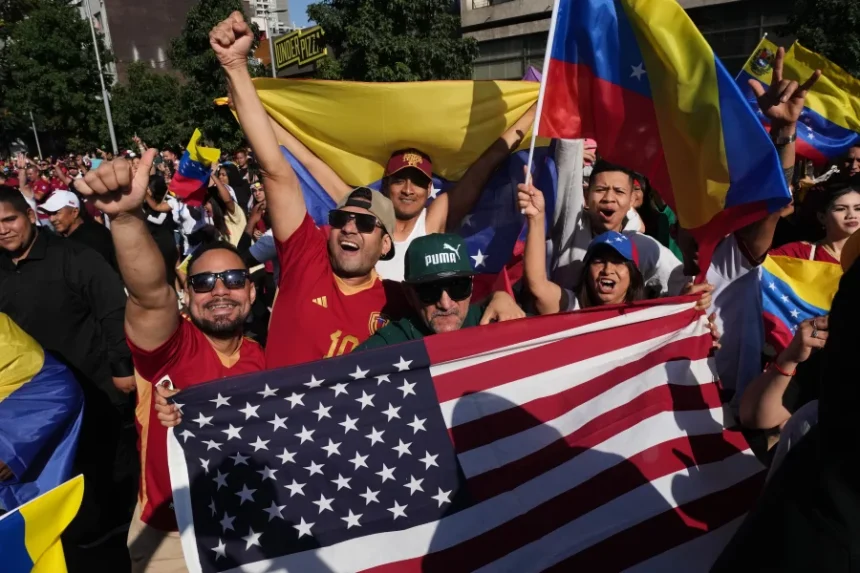
The Trump administration’s sudden airstrikes on Venezuela and the reported capture of President Nicolás Maduro have sent shockwaves across Latin America and beyond, marking the most significant U.S. military intervention in the region since the 1989 invasion of Panama.
Regional fallout in Latin America
Neighboring Colombia moved quickly to secure its border. President Gustavo Petro announced the deployment of security forces in anticipation of a potential refugee surge, as Colombia already hosts the world’s largest Venezuelan diaspora. Petro confirmed multiple U.S. strikes in Caracas, including a military airbase, other strategic installations, and the legislative building, condemning the operation as an act of aggression and calling for immediate de-escalation.
In Brazil, President Luiz Inácio Lula da Silva sharply criticized the U.S. action, saying it crossed an “unacceptable line” and revived memories of past U.S. interference in the region. Lula warned the strikes threatened Latin America’s long-standing aspiration to remain a zone of peace, even as Brazil itself has distanced from Maduro after refusing to recognize his widely disputed 2024 reelection.
Chile and Mexico also voiced strong opposition. Mexico labeled the strikes a violation of the U.N. Charter and urged an immediate halt to hostilities. Tensions escalated further after President Trump, in a Fox News interview, accused Mexico of being run by drug cartels and suggested decisive action may be necessary.
Allies react with alarm
Venezuela’s closest allies, Cuba and Nicaragua, are closely monitoring developments. Cuban President Miguel Díaz-Canel denounced the operation as “state terrorism” and called for urgent international intervention. The situation is especially critical for Cuba, which depends heavily on Venezuelan oil amid its worst economic crisis in decades.
Global response
On the world stage, Russia and China strongly condemned the U.S. strikes. Moscow called the operation an “unacceptable assault” on Venezuela’s sovereignty, while Beijing said it was “deeply shocked” by what it described as Washington’s blatant use of force in violation of international law. Despite rhetorical support, Russia has so far avoided a direct confrontation with the U.S.
In Europe, European Commission President Ursula von der Leyen emphasized support for a “peaceful and democratic transition” in Venezuela but stopped short of explicitly criticizing Washington, stressing that any solution must comply with international law.
What comes next
Venezuela has requested an emergency meeting of the U.N. Security Council, raising serious questions about the legality of the U.S. operation. U.N. Secretary-General António Guterres said he was “deeply alarmed” by the developments and expressed concern that international law may not have been respected.
As diplomatic pressure mounts and regional instability grows, the strikes risk reshaping political alignments across Latin America and intensifying global scrutiny of U.S. interventionism.