The United States will take control of sales of sanctioned Venezuelan oil “indefinitely” as it moves to ease restrictions on the country’s crude entering global markets, according to the White House.
Officials said the initial phase would involve selling between 30 million and 50 million barrels of oil, with the revenue kept under US government control to maintain leverage over Venezuela’s leadership.
“We’re going to let the oil flow,” Energy Secretary Chris Wright told energy executives at a conference in Miami.
It remains unclear how much of the money from the sales — which analysts estimate could bring in around $2.8 billion (£2.1 billion) — would ultimately go to Venezuela.
“We need to have that leverage and control of those oil sales to drive the changes that simply must happen in Venezuela,” Wright said, adding that some of the funds would eventually “flow back into Venezuela.”
White House officials said on Wednesday that steps had already been taken to begin marketing the oil, with the administration working alongside major banks and commodity trading firms to carry out the sales.
As part of the strategy, the US is preparing to selectively roll back long-standing American sanctions that have limited Venezuelan oil exports for decades.
The comments add detail to plans announced by President Donald Trump on social media on Tuesday. Trump said Venezuela would be “turning over” up to 50 million barrels of oil to the US, to be sold at market prices.
He said the money would be placed into US-controlled accounts, which he would oversee as president, and used to benefit both Venezuelans and Americans.
Secretary of State Marco Rubio said the goal was to distribute the funds “in a way that benefits the Venezuelan people — not corruption, not the regime — so we have a lot of leverage to move on the stabilisation front.”
Analysts say the impact of the policy shift will depend heavily on details, including how quickly the oil is sold.
The plan has already drawn sharp criticism from Democrats. Senator Chris Murphy of Connecticut called it “insane.”
“They are talking about stealing the Venezuelan oil at gunpoint for a period of time undefined as leverage to micromanage the country,” Murphy told reporters. “The scope and insanity of that plan is absolutely stunning.”
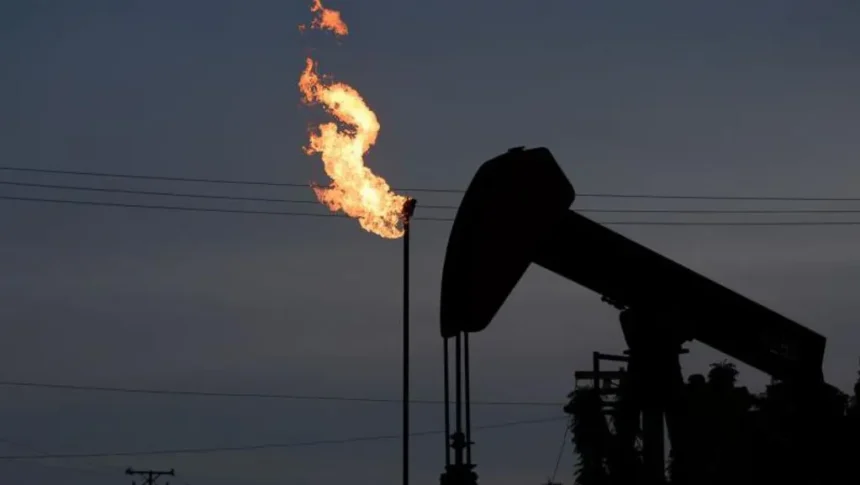
Venezuela holds some of the world’s largest proven oil reserves, but years of underinvestment, mismanagement and US sanctions have slashed production to about one million barrels a day — less than 1% of global output.
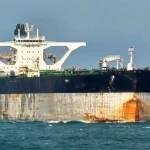
In recent years, much of that oil has gone to China. But those shipments have been disrupted in recent months after the US increased military strikes and enforced a blockade of Venezuelan tankers as part of its pressure campaign against former president Nicolás Maduro.
On Wednesday, China’s foreign minister condemned the US seizure of Maduro and Washington’s plans to take control of Venezuela’s oil resources.
Trump is set to meet with oil industry executives at the White House on Friday.
Analysts say US oil giant Chevron — the last major American firm still operating in Venezuela — and US refineries, which are designed to process Venezuela’s heavy crude, are well positioned to benefit from any increase in oil flows. Some European companies also maintain a presence in the country.
Redirecting Venezuelan oil to the US could put pressure on Mexico and Canada, which produce similar types of crude and are currently major suppliers to US refineries.
Oil prices, already relatively low due to steady supply and weaker demand expectations, slipped further over the past week amid speculation that Venezuela could gain greater access to global markets.
Still, experts warn that significantly boosting Venezuela’s oil output would take years and require billions of dollars in investment — something companies may hesitate to commit to, given safer opportunities in the US and in countries like Guyana.